
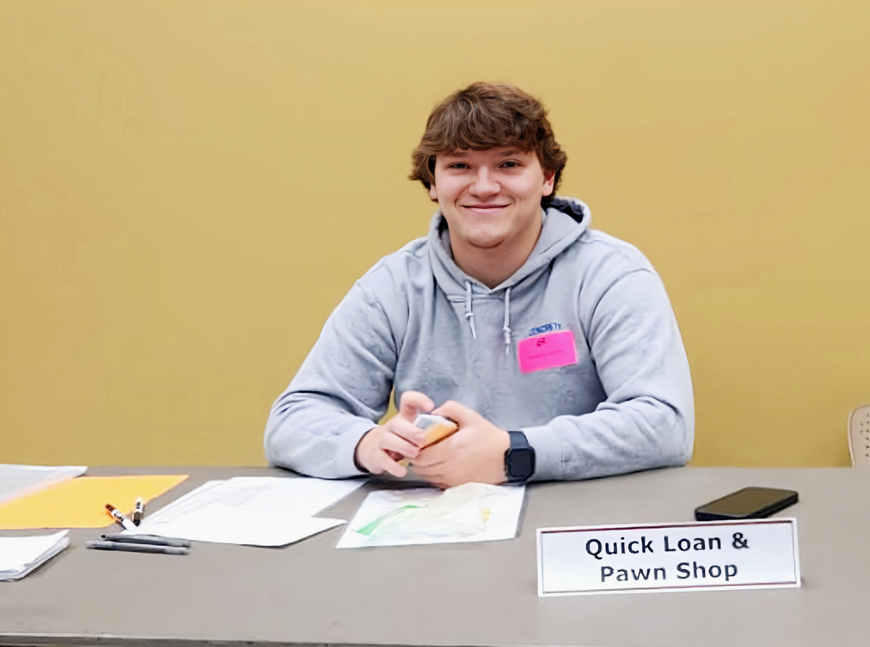
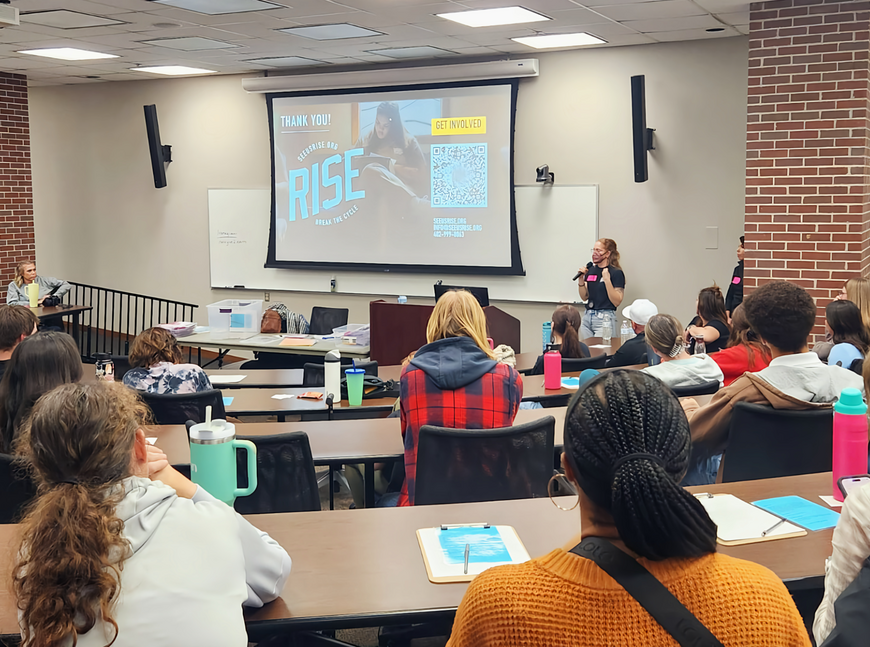
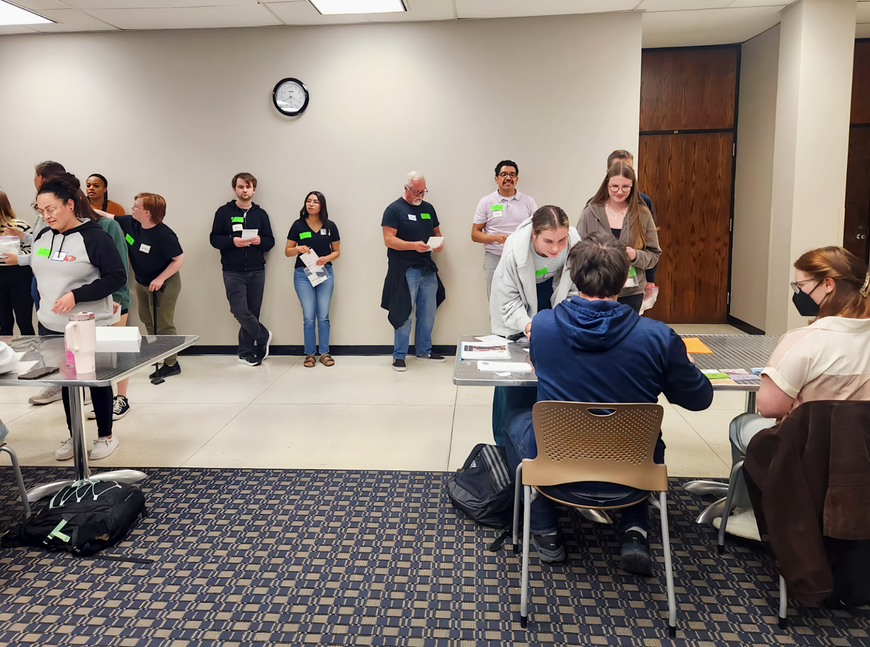
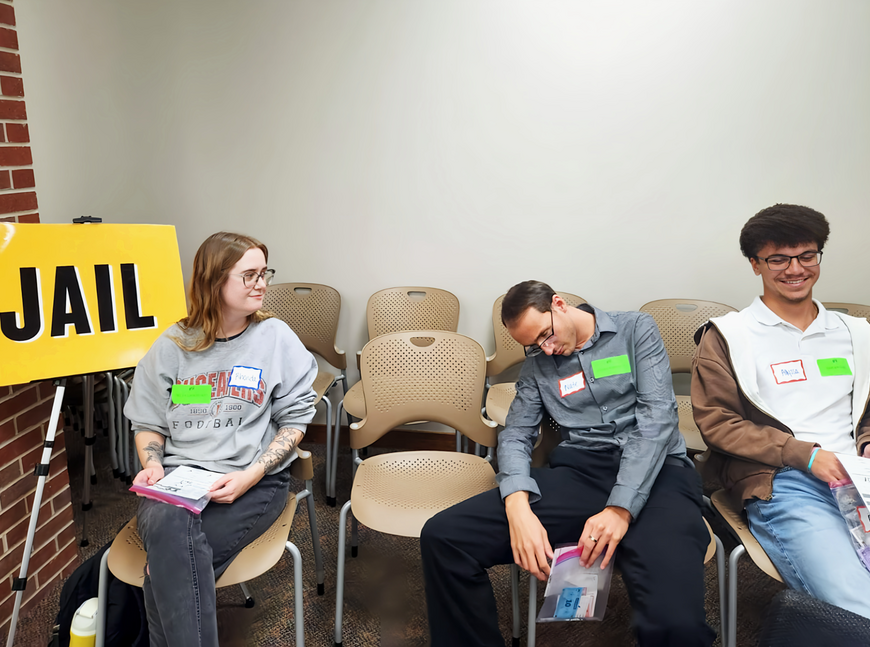
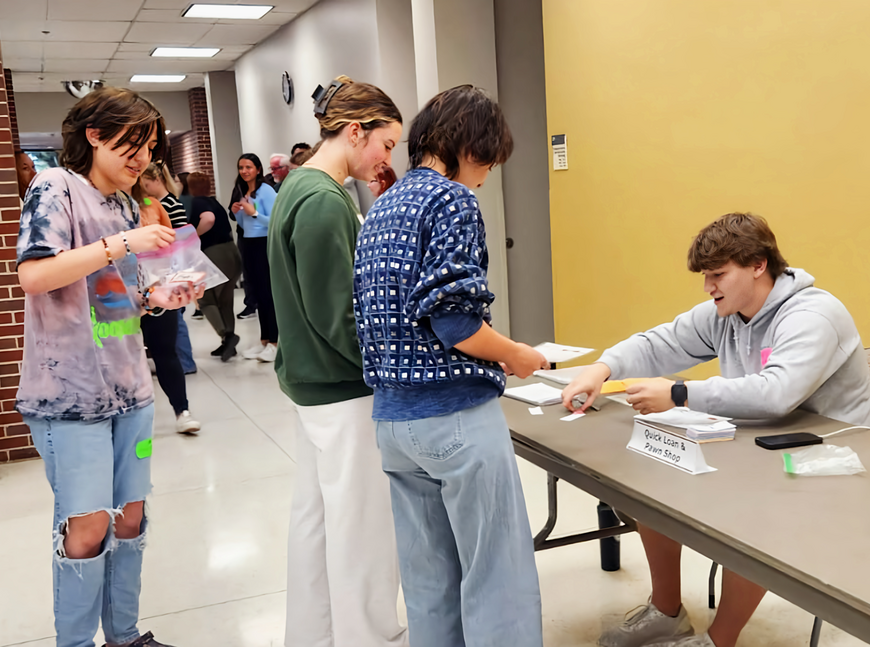
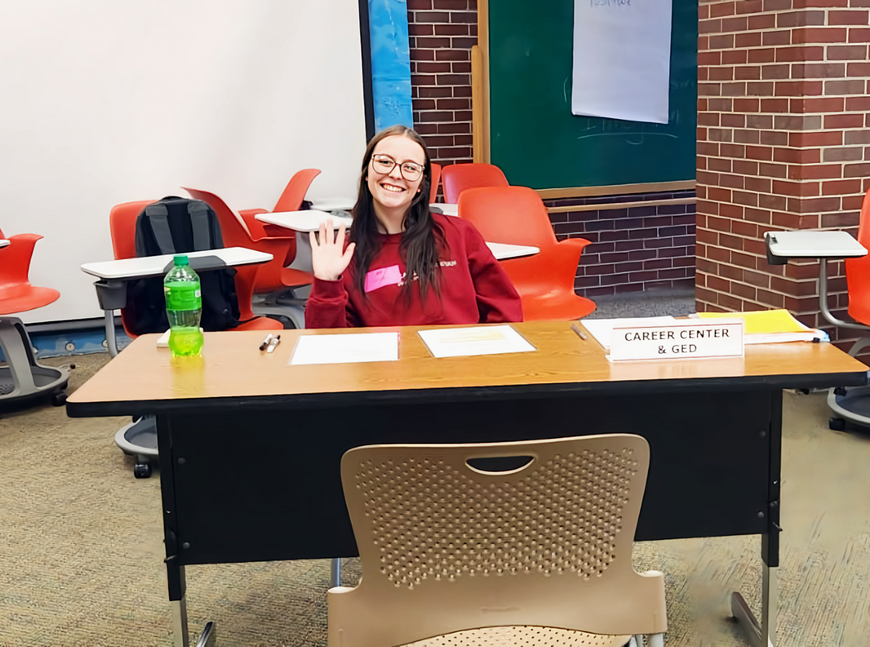
Fifty Nebraska Wesleyan University students and nearly 20 professors participated in a RISE Reentry Simulation, an interactive, empathy-building workshop that compresses the first month of life after incarceration into a single hour. Participants navigated challenges such as securing employment and housing and complying with parole requirements, revealing the systemic barriers faced by individuals returning to their communities.
The event, held in November 2025, was organized by the NWU Sociology and Criminology Department and facilitated by RISE, the largest nonprofit organization in Nebraska dedicated exclusively to reentry support.
Throughout the simulation, participants encountered repeated roadblocks as they attempted to rebuild their lives, often lacking the money, transportation or services needed to move forward. While they leaned on one another for support, Nebraska parole rules frequently prohibit individuals with felony convictions from associating with each other.
After facing these challenges, participants took one of three paths: some continued on as best they could, some disengaged, and others sought help, mirroring what often happens in real life.
As the pressure of the simulation mounted, desperation set in, and some participants turned back to crime. That turning point created an opportunity to discuss why it happened and what it reveals about the real-world pressures faced by people navigating reentry.
Reflecting on the experience, Heba Khalil, PhD, assistant professor and department chair, shared:
“Even a month after the reentry simulation, students continue to return to conversations about the challenges of reentry and the ways the experience reshaped their understanding,” Khalil said. “One of my sociology students asked whether it could become an annual event, reflecting that even an hour of experiencing the discomfort of reentry was enough to fundamentally shift how they think about individuals returning to society after incarceration."
“Moments like this capture exactly what I hoped the simulation would accomplish: creating space for students, faculty and staff to learn through discomfort by intentionally stepping into the lived realities of those with far less privilege.”
In addition to RISE staff, 17 juniors and seniors in the SOC 3920 Social Theory class helped run the simulation, supporting transportation access, social service navigation, and other day-to-day reentry touchpoints.